
Cleaning and Maintenance
Monuments made of genuine polished granite can tolerate regular cleaning to maintain like-new sheen and condition year after year.
For polished granite monuments, you can try these prescriptive cleaning methods:
Dirt & Biological Build-Up Removal
Start with a spray bottle of soapy water (1 part dish soap, 40 parts water). Saturate entire surface of stone and scrub vigorously with Tampico brush. This will remove surface level dirt and grime.
Identify heavily soiled areas and re-apply soapy water to saturate those areas. Remove tough contaminates, like tree sap or bird droppings, with a plastic razor blade.
Repeat process as needed. Rinse stone thoroughly with distilled water once surface is clean. Use a detailing brush to clean dust out of engravings and letterings.
Water Calcification Removal
Start with a spray bottle of soapy water (1 part dish soap, 40 parts water). Saturate entire surface of stone and scrub vigorously with Tampico brush. Rinse with distilled water. This will remove surface level dirt and grime.
Read all instructions and warnings on Endurance Hardwater Solvent. Put on gloves and safety glasses. Ensure exposed skin is covered. Apply Endurance over the entire surface of the stone. Allow solvent to sit for a minute. Agitate solvent with Tampico scrub brush in circular motions. You will notice the solvent turn dark and dirty. Rinse off with distilled water.
Identify large areas of the stone surface that are still calcified with hardwater. Reapply Endurance to those areas. Agitate with Tampico brush. Re-attack those areas with the scouring block. Move the block in a circular motion with flat side against the stone (avoid using the block edge).
Small areas of the headstone that feature intricate engravings should be treated with care and caution. To avoid damaging these areas, apply Endurance, allow to soak for a minute or two, and then gently scrape away calcification with a plastic razor blade or the flat side of the scouring block.
Rinse the stone thoroughly once surface is clean. Remove scouring dust or grime buildup from stone engravings or lettering using a detailing brush. As stone dries, it will return to its normal color and the polished surface will be clean and shiny.
Stain Removal
Start with a spray bottle of soapy water (1 part dish soap, 40 parts water). Saturate entire surface of stone and scrub vigorously with Tampico brush. This will remove surface level dirt and grime.
Identify stained areas. These may appear as yellow or brown spots that are deeper than surface level. The most common causes of staining are tree sap, fallen fruit, or even tractor oils sitting on the stone surface. Remove sticky residues or contaminants with soapy water and a plastic razor.
Mix baking soda and water into a thick paste (about 2 parts soda to 1 part water). Apply the paste directly over the stained area. Allow to sit for several hours or up to a full day. For upright headstones, cover the paste with plastic wrap to keep it held in place.
Remove the paste with a plastic razor blade and rinse the area thoroughly with water. For stubborn stains, add a small amount of hydrogen peroxide to the baking soda and water solution. Reapply, cover with plastic wrap, and allow to sit for several hours before removing and rinsing. Always rinse the stone thoroughly after applying cleaners and solvents.
Mold Removal & Prevention
Start with a spray bottle of soapy water (1 part dish soap, 40 parts water). Saturate entire surface of stone and scrub vigorously with Tampico brush. Rinse with distilled water.
Identify areas with mold growth. This will likely be on the rough cut edges of the stone, or directly inside the stone engravings. Use a detailing brush to apply a small amount of water-diluted white vinegar to those areas. Gently agitate with the detailing brush. Allow to sit for a minute or two.
Rinse and repeat until mold is removed. Do NOT saturate the stone’s surface with vinegar. Vinegar is acidic and can etch the stone. Alternatives to vinegar include: D-2 Biological Solution or Wet & Forget Cleaner.
Download our Printable Headstone Cleaning Guide
Avoid using metal bristle brushes on your marker, as these abrasive brushes can scratch and damage the polished stone.
Avoid using harsh chemicals or acidic cleaners as these can stain, pit, or strip your marker’s surface. This includes Bleach, Windex, and other household cleaners!
It is important to know what kind of surface finish your loved one’s marker has in order to utilize the most appropriate cleaning method. Granite markers that have a honed, sawn, acid-washed, or frosted surface cannot always be cared for using conventional cleaning methods. Monuments that have been laser-engraved may require more specialized care compared to traditionally engraved markers. If you are not sure what kind of surface your monument has, it may be best to consult with a professional cleaner or monument company before attempting a DIY stone cleaning.
Need Headstone Cleaning supplies? Accent Monuments is now offering Headstone Cleaning Kits, Endurance Water Stain Remover, D/2 Biological Solution, and other cleaning tools for sale in-store.


Wear and Weathering
Granite is an extremely durable hard stone that erodes approximately 1/10th of an inch over a thousand years time. It is a blend of quartz, feldspar, and other hard minerals that had been fused together during the magma cooling process thousands of years prior as the result of volcanic activity. Because of its composition and durability, granite has become the premiere stone choice for monuments and memorial markers.
Modern day granite monuments are cut and shaped from large boulders of quarried stone. Different variations of granite can be found all across the United States, North America, and the rest of the globe. They come in a range of colors and a mix of mineral compositions. Most monuments and markers are shaped and the flat surfaces are cold polished, producing the optimal sheen and an acceptable engraving surface.
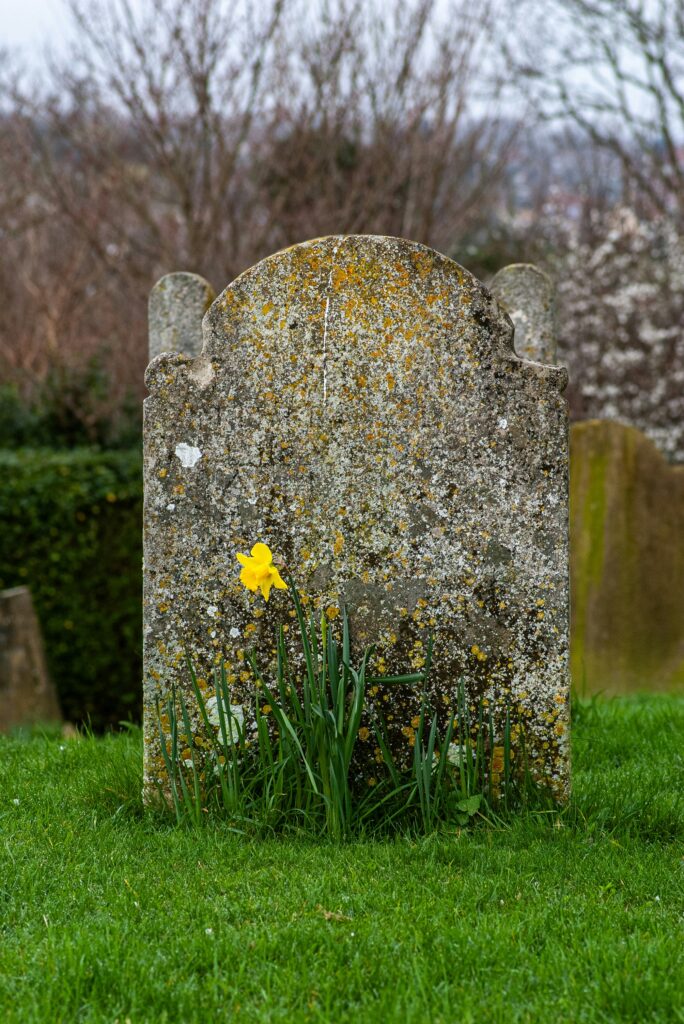
Polished granite weathers and wears extremely well in most conditions. Granite monuments erode gradually over time when exposed to natural elements, such as wind, water, or snow. The stone’s surface may become stained or discolored by harsh minerals in water or moss growth. The minerals in our Central Valley water tend to create surface calcification that may give the appearance of staining or discoloration. All granite, regardless of color, will naturally gray and fade over time. These stone conditions can be improved with regular stone cleaning.
All stone monuments, including granite, are susceptible to chipping, cracking, or breaking due to physical impacts. This can be caused by a number of circumstances, but the most common are attributed to vandalism, falling debris, or heavy machinery. Stone splits and breakage are rare. Even still, in an instance of stone damage, the marker can be evaluated for repair. If repair is not possible, a full replacement may be the best recommendation.